Posts

Showing posts with the label creativity

Brilliance and Disorder

Image
  We like to imagine brilliance as clean — a straight beam of light cutting through confusion. But most brilliance lives inside disorder. The mind that invents, composes, or discovers often does so in a storm. Disorder isn’t the opposite of intelligence; it’s the environment where intelligence learns to swim. The same neural speed that produces insight can also produce chaos. Thoughts arrive too fast to file. Emotions surge before reason catches up. The person who sees ten possibilities may struggle to choose one. Some people organize their brilliance through systems — lists, rituals, calendars, routines. Others organize through motion — conversation, improvisation, crisis. Both work, until they don’t. When the system breaks or the motion stops, disorder floods back in. The creative paradox Brilliance and disorder share a common root: pattern sensitivity . The mind that notices patterns also notices their breakdowns. It sees what others miss — and what others ignore. That awareness...

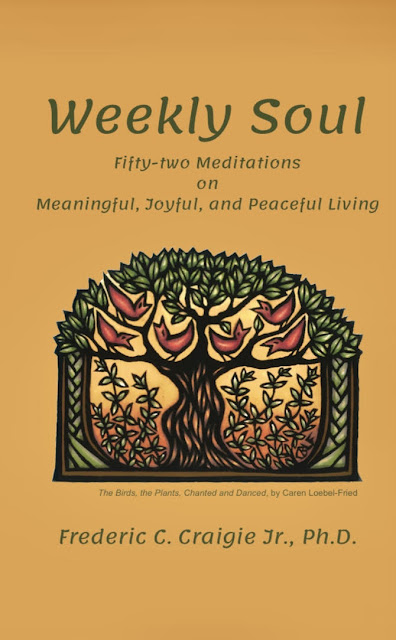
Weekly Soul: Week 42 - Creativity (Craigie)

Image
  Today's meditation from  Weekly Soul: Fifty-two Meditations on Meaningful, Joyful, and Peaceful Living   by Dr. Frederic Craigie: -42-   We fail to use our powers when we fail to think of our lives and our work, whatever it is, as creative—as potential art, or “life art.”   Dan Wakefield   Creativity applies to all of life, not just the Arts. Wakefield goes on to give examples of a telephone operator singing greetings in answering the phone, of a business person seeing the possibilities of a new product, and of a yoga teacher’s creative guided meditation. This was the mid-1990s. I’m frankly not sure whether there are telephone operators anymore, but you get the idea. It is, as Wakefield says, “life art.” You have the ability to choose how you do what you do and to make even mundane daily activities into exercises in creativity. You can explore a different process of interaction in your committee meetings. You can tinker with your choices in clothing. You ...

Dan Akroyd: Ghosts, Grit, and Neurodivergent Creativity

Image
  Dan Aykroyd, co-creator of  Ghostbusters , has spoken openly about his Asperger’s diagnosis. His intense interests in law enforcement and the paranormal—classic autistic traits—became the foundation for one of the most iconic films of the 1980s. His quick recall, quirky humor, and obsessive research helped shape his characters and scripts. Aykroyd didn’t suppress his traits—he wrote them into pop culture. Autism didn’t hold him back—it gave him a franchise.  His story is a celebration of eccentricity as creative fuel. Post inspired by Colette McNeil's books on autism:  Choice and Structure for Children with Autism .  Entienda el desafino de -no - en los ninos con autismo ,  and  Understanding the Challenge of "No" for Children with Autism   by Colette McNeil.  Read more posts about Colette and her books  HERE . To purchase copies of any MSI Press book at 25% discount, use code FF25 at  MSI Press webstore . Want to read an MSI Pres...