Posts

Showing posts matching the search for cancer diary

Cancer Diary: Why the Complaint "I'm Cold" from a Cancer Patient Should Be Taken Seriously

Image
Carl frequently complained of being cold during the last two months of living/dying with cancer. Even with the heat at, for me an uncomfortable, 72 degrees (when we typically maintain it at a comfortable 66 degrees). Even when wearing a sweater or even something heavier and smothered in blankets. He was always complaining about being cold, and only after he died did I find out why -- and that he really was very cold because body temperature drops when someone is dying. We were constantly struggling over how to compromise on temperature. My son and I were extremely uncomfortable with the amount of heat Carl would set the thermostat for, as well as having concerns with the cost of the amount of gas needed to keep the house so hot (dying can create immense financial stress -- a topic Cancer Diary will address in the future).  In general, cold registered for me, having grown up in Maine and having spent a few winters in Siberia, pictured above, on a very different scale from the perce...

Cancer Diary: Blogs with Real Answers to Caregivers and Family Members of Dying Patients

Image
  Although it is often difficult to find time to read while coping with cancer or providing care to loved ones with cancer, following one or more blogs on cancer and interacting with them can bring helpful information and peace of mind.  Here is a list of cancer blogs from the CCC. AONN+ Blog Meant for nurses, the topics in  this blog  are nonetheless helpful for any caregiver, such as this one on  compassion fatigue . There does not seem to be a search function, so you may need to sift through the topics to get to the ones you might find helpful, but the topics can be seen at a glance so it is not unduly time-consuming. Cancer Compass This is not a blog per se but rather an  informational message board  seeking to individualize and personalize information and care. Cancer Support Community Blog This blog  addresses specific cancers on a personal level, includes posts on multiple facets of cancer, and is very easily searched. (One cancer that it d...

Cancer Diary: Food, Acidity, Cancer, and Confusion

Image
  Sometimes it is hard to get an answer from an oncologist in ay you need to understand it. They give you the full onion, but what you need is help in peeling the pieces .  What I have been trying to get my head around is the concept of acidity and cancer. My friend, Julie, a nurse-researcher who is quite respected, claims to have cured her husband of cancer by ensuring that his body provided cancer with an acid-free environment where it could not grow. So, what about that is true? Her husband did have stage 3 cancer (stomach).  Her husband is now cancer free and has been so for a few years. Her husband is not young -- in his 60s when cancer struck and in his 70s now (not sure that means anything) She did ensure a non-acidic diet for him. The question remains, though, is whether that diet cured the cancer (or put it into remission) or had any effect on it, i.e. did something else natter instead? This site agrees with Julie. It claims that "acidic pH leaders to cancer and...

Cancer Diary: Native Americans and Cancer

Image
  (photo from cancer study website) Today is the observation of a combined holiday: Columbus Day and Indigenouse Peoples Day. In observance of this done, focusing on the second holiday, Cancer Diary is sharing some important dasa from a study of cancer among indigenous people. To cut to the chase, here are the conclusions: American Indian and Alaska Native people were more likely to get liver, stomach, kidney, lung, colorectal, and female breast cancers than White people in most regions. Compared to White men, Native American men had higher rates of getting liver, stomach, kidney, colorectal, and lung cancer and myeloma. Compared to White women, Native American women had higher rates of getting liver, stomach, kidney, colorectal, and cervical cancer. Native American men were more likely to get cancer than Native American women. The difference ranged from 23% more likely for lung cancer to 129% more likely for liver cancer. The biggest differences in cancer rates between Native Amer...

Cancer Diary: Cancer Treatment in Nigeria?

Image
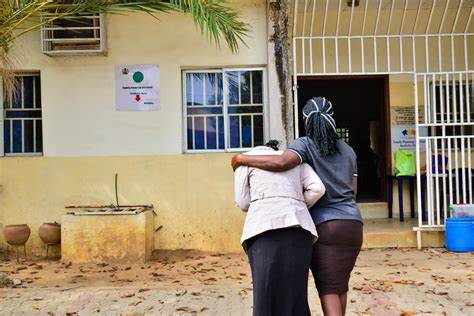
  This is a slightly different kind of Cancer Diary post. It is not sharing information but rather asking for it.  One of the MSI Press staff, who lives in Nigeria, sent a note yesterday: "Sadly, I have some bad news to share with you. My mother has been diagnosed with stage 4 breast cancer that has now spread to the bone to cause  Spinal Metastasis ,  resulting in   a   fracture of the right femoral neck with the femoral head tilting into varus position and surrounding bone marrow and joint effusion. I was wondering if you know of any US-based not-for-profit organisation that helps women in Africa (especially in Nigeria) in this kind of condition with medical, counselling or financial assistance?  We are in need of medical assistance to manage my mother's condition. I was hoping that you can connect me with any such organisation to provide us with the best treatment options available. The medical expenses associated with ...

Cancer Diary: 🧠 Carl’s Story: Hypercalcemia in Real Life

Image
  For Carl, hypercalcemia didn’t just show up in lab results—it appeared as brain fog, confusion, and instability . He fell several times, a common outcome when calcium disrupts muscle and nerve function. These symptoms led him to the ER repeatedly, where doctors gave him IV infusions to quickly lower calcium levels. 💉 What’s in the ER Shots or Infusions? According to clinical guidelines, ER treatment for hypercalcemia of malignancy typically includes: IV fluids (saline) : The first step, flushing calcium through the kidneys. Bisphosphonates (pamidronate, zoledronic acid) : IV drugs that block bone breakdown and reduce calcium release. Denosumab : A targeted antibody used when bisphosphonates aren’t enough. Calcitonin injections : Fast-acting hormone therapy that lowers calcium within hours, though only short-term. Steroids : Sometimes used in lymphoma-related hypercalcemia. Dialysis : Reserved for severe cases with kidney failure. Carl received IV bisphosphonates/deno...