Posts

Showing posts matching the search for intuition

What Sensing Means in Socionics

Image
In Socionics, sensing is not merely about physical perception — it’s a way of processing reality through the tangible, the immediate, and the concrete. It’s one of the eight information elements that describe how people metabolize experience. Where intuition looks toward possibilities, sensing looks toward presence. The Essence of Sensing Sensing is the art of noticing what is . It attends to texture, temperature, comfort, movement, and form. It grounds awareness in the body and environment — in what can be touched, measured, or felt directly. A sensing type doesn’t just see the world; they inhabit it. Their cognition is rooted in the physical and practical dimensions of life: how things work, how they feel, how they fit together. Two Faces of Sensing Socionics divides sensing into two distinct information elements: Introverted Sensing (Si): Focuses on inner comfort, stability, and sensory harmony. Core question: “How do I feel in this environment?” Extraverted Sensing (Se): Focus...

Daily Excerpt: Introductory Lectures on Religious Philosophy (Sabzevary) - What is meant by "religion" and by "philosophy"

Image
  excerpt from Introductory Lectures on Religious Philosophy by Dr. Amir Sabzevary From Chapter 1. Introduction to Religious Philosophy [Lester: So this is a course on religion. What do you mean exactly by “religion,” or by “philosophy”?] There is this wonderful animal called a salmon fish, which of course begins life as a tiny egg. By the sheer force of the water, this egg soon finds itself at the bottom of a river and after a few weeks, the shell opens and out comes a fish. At the bottom of the river, this fish makes lots of friends, buys a house, has children, and has everything that could possibly make it happy. In other words, life is really good for this salmon. Without any warning though, she gets attacked by her own psychology. Don’t ask me how it happens, but one morning the fish says to herself, “I don’t belong here. This is not my home. I have a house, but it’s no longer livable. I have a relationship, in which I feel profoundly alone. I have children, but they’re all l...

Daily Excerpt: Understanding the Critic (Quinelle) - The Critic's Approach to Life

Image
  Excerpt from Understanding the Critic by Quinelle - Chapter 5 Understanding the Critic’s Approach to Life What is the Critic? The Critic is an Intuitive Thinking Introvert (ITI). As such, he or she is a combination of the three expressed traits and the unexpressed trait Irrationality (emphasis on the Jungian definition, not the English-language lay definition). Filatova describes the Critic in the following way: Critics’ frowns and sullen expressions distinguish them from others. An onlooker might think that the Critic is criticizing them. The figure is most often heavyset and bulky. Those who have strong Intuitive functions may appear unkempt. They do not pay attention to their appearance, causing those around them to want to look after them. In socializing, they are often gentle, courteous, and tactful. However, those with strong logic functions can be neat and orderly. Critics can be aggressive when their interests are threatened. Critics perceive the world in its entirety and...

Weekly Soul: Week 43 - Love & Inspiration (Craigie)

Image
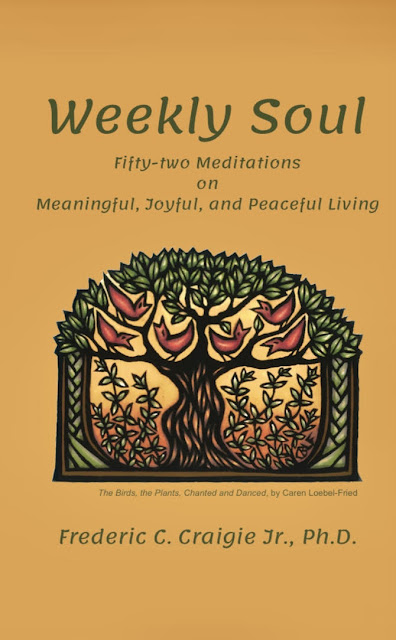
  Today's meditation from  Weekly Soul: Fifty-two Meditations on Meaningful, Joyful, and Peaceful Living   by Dr. Frederic Craigie: -43-   Just don’t give up trying to do what you really want to do. Where there’s love and inspiration, I don’t think you can go wrong.   Ella Fitzgerald   Ella Fitzgerald, the “Queen of Song,” had a legendary career that spanned over half a century. Beginning in the early 1930s, she performed with the likes of Dizzy Gillespie, Benny Goodman, Nat King Cole, and Frank Sinatra and helped to form new styles in American popular music. She was noted both for her vocal and artistic range and for her remarkable improvisational ability. Reacting to the formulaic style of big band swing music, Fitzgerald was at the cutting edge of bebop, the jazz movement that turned away from prominent bass lines and featured extended improvisational solos from instruments like saxophone and clarinet or from the voice in the role of instruments. You can...